

Author’s note: this essay is extremely critical of certain social norms in The United States. No offense is intended for readers who, unlike this author, retain feelings of patriotism for this country, but words cannot be minced on matters like these. It is hoped that, for those readers in particular, matters on which there are agreement will mitigate any decision to unsubscribe.
Readers of this publication know that The Raven’s Call: A Reactionary Perspective is hardly an expression of American patriotism or American exceptionalism—far from it. The criticisms and indictments against American culture and American society at large are seemingly unending. One particularly damning indictment of modern American society in particular is its absurd laws regarding alcohol consumption as well as the American legacy of puritanism in relation to alcohol more broadly. Some readers of various perspectives--from mainstream conservatism to those of a more radical right, reactionary persuasion—may disagree with this article’s thesis, but the many number of indictments against these absurd bodies of laws should be persuasive to most.
Skepticism of these laws should be founded on awareness of their dubious historical antecedents. Specifically, these laws are a direct continuation of the moral rigorism from certain Protestant sects in New England.1 This religious fervor exploded in the 19th Century and the temperance movements that eventually culminated with The Eighteenth Amendment and the prohibition of alcohol. Both the temperance movements in the 19th and early 20th centuries and the religious fervor that propelled the nation towards teetotalism and then absolute prohibition of alcohol can trace their lineage to the puritan legacy. The body of dubious alcohol laws that have resulted in the wake of this legacy runs the gamut from absurd state laws that impose ridiculous, time-wasting restrictions on the sale of wine, beer, and spirits, to various “dry counties” as hold-outs of the prohibition era, to the outrageous drinking age of 21 that was imposed on state governments by The National Minimum Drinking Age Act of 1984.
Both those who live and reside in the States as well as those who have visited for any period of time can attest to many of the ridiculous state liquor laws that impose all sorts of absurd restrictions on the purchase and consumption of alcohol. These restrictions only serve to waste people’s time and burden the populace with all sorts of inefficiencies and costs on the purchase of beer, wine, and alcohol. Different states, quite obviously, have promulgated different sets of alcohol laws. Some states, like Virginia and formerly Washington state, have established state run liquor stores that have a state monopoly on the sale of hard liquor and spirits. Whereas in other states one can buy gin, vodka, and other spirits at any privately run liquor store, states with these laws require persons to purchase hard liquor at these state-run stores. Some states also restrict the sale of wine and even beer, limiting sales of these items to state-run stores as well. This leads to higher prices due to lack of competition as well as exorbitant state liquor taxes. Moreover, these state run liquor laws often have curtailed hours. This is done intentionally to curb sale of alcohol.
State laws impose ridiculous mandates in other ways. Pennsylvania is one of the worst offenders. Those who visit the Keystone State will soon learn that a six-pack of beer is often purchased at sit-down restaurants. This is because Pennsylvania law prohibits the sale of beer at any grocer or other institution unless that institution serves hot, prepared food as a sit-down restaurant. This imposes higher costs on both the consumer and grocery stores and other establishments, many of which, in response, operate a sit-down restaurant section at a significant loss in order to sell beer: carry-out only does not qualify. The sale and purchase of wine is largely restricted along with liquor to Pennsylvania’s “fine wine and good spirits” stores, so that a person who wants to buy beer, wine, and alcohol, either for a party or gathering or to simply acquire stock of one’s favorite alcoholic beverages must go to at least two different types of stores. That is not entirely unusual in different states, except the body of Pennsylvania’s laws can require trips to three or more stores: for example, no one store carries all three varieties of beer one wishes to purchase, so a person must go to two or more stores for beer and then another stop for wine and spirits. This is compounded by limited stock in different “fine wine and good spirit”stores as well, so that often one must visit more than one of these stores if buying several different items.
In Pennsylvania and in many other states as well, there is a state-mandated last call at 1:30 to 1:45 whereby bars must cease serving before 2:00 A.M. Some states, including Delaware, Maine, and Nebraska, last call is at 1:00 AM. For most young people, this is just when the party gets started in earnest, except in these handful of states with such an absurd cut-off time.
Virginia has a similarly ridiculous policy of prohibiting the serving of alcohol unless an establishment also offers restaurant food service. As a result, there are no bars in Virginia as the term is properly understood. All drinking establishments in Virginia must offer a restaurant food service to comply with this law, often at a loss which is either absorbed by the proprietor or, stated more precisely, is passed on to its patrons. Even worse, a mixed beverage license in the state requires that establishments may not have alcohol sales in excess of 55 percent of all revenues, and that food sales must be in excess of $4,000.00 a month.
Utah, due in large part to its Mormon heritage and influence, has the strictest laws in the country. Only beer with alcohol by volume of five percent or lower is allowed to be sold in grocery and convenience stores. Anything higher, as well as all wine and spirits can only be obtained through state run liquor stores. The state even regulates and calibrates mixed drinks, prohibiting any serving greater than 1.5 ounces in a mixed drink. Utah also imposes ridiculous food to alcohol beverage ratios of some 70 to 30 percent. Utah even reduced its maximum blood alcohol content to just .05 percent blood alcohol; anything higher invokes an arrest and charge for driving while under the influence. Other states have other absurd laws, including Indiana which only allows sale of beer at room temperature.
The absurdity of these laws is compounded by the number of “dry counties,” which prohibit the sale (but not consumption) of alcohol. These counties are little more than straggling holdouts left over from the prohibition era. Those who reside in such counties must travel to a different county to procure beer, wine, and spirits. Such an imposition is more than a mere inconvenience with ridiculously high gas prices in the wake of the current conflict with Iran. States with dry counties are found particularly in the South and Midwest, and often have similarly ridiculous laws at the state level. Kansas, the last state to repeal prohibition of alcohol at a state level in 1948, has many dry counties, with many establishments having to operate as private drinking clubs, as bars and saloons open to the public are prohibited by county law, not unlike the prohibition era.
Perhaps the greatest outrage of America’s backward alcohol laws is the drinking age of 21. The absurdity of prohibiting 18-year-olds—legal adults—from drinking beer, wine, or even spirits is both jarring and obvious, particularly when one considers that in this pathetic excuse for a country persons between the age of 18-20 are prohibited to drink (although most correctly defy such unjust laws) but are allowed to vote, enlist in the nation’s armed forces, and even appear in pornographic content either for commercial gain or for no compensation at all. The latter is of course the one activity that should be banned across the board, not drinking for persons under 21. Indeed, this point cannot bear enough emphasis. Lest there is any confusion as to how backwards and perverse this shit country really is, a young woman on her 18th birthday can debut in some interracial gang-bang pornographic video, marketed and touted for its appeal to “just turned 18” and interracial fetishes, and yet she is prohibited, by law, from drinking wine, beer, or even spirits.
Until recently, such laws seemed as ridiculous as attempts to legislate against the sky being blue. Unfortunately, at least from this author’s admittedly controversial perspective, these measures seem to be working. Alcohol consumption by high school students has plummeted since the turn of the millennium. This, however, is attributed in no small part to other factors, including increased numbers of young people being shut-in recluses, which is in turn attributed to the sudden ubiquity of smartphones and social media as well as the death of the suburban mall. It also seems to coincide with a general curbing of what may be imperfectly described as teenage lust, or, as others have put it, a sex recession in young people. Teenagers, in the aggregate, have less high school romances, less instances of going steady than in generations past.
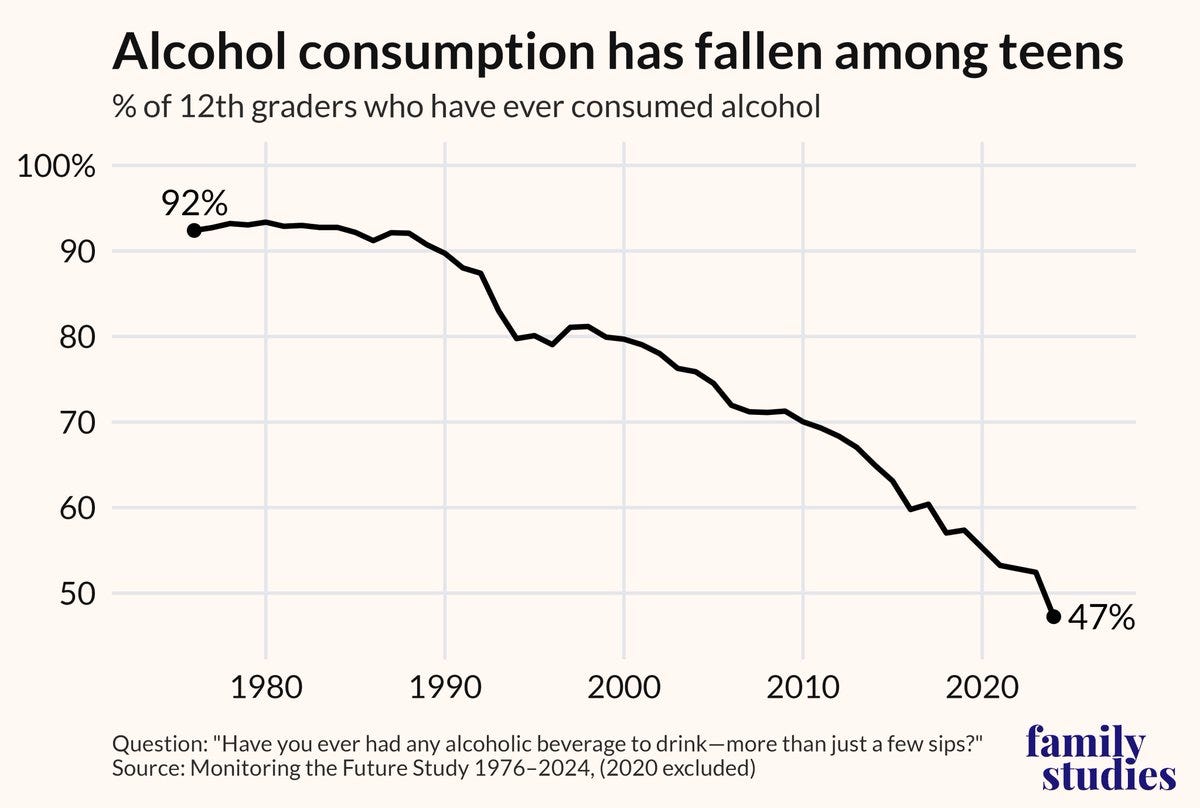
While there are certainly other factors at play for this drop in drinking among high school teens, the restriction of alcohol to anyone under 21 is certainly a factor. Before such data was released, it seemed that it was an inevitability that high school kids drink at peer parties in the weekend—certainly underclassmen in college did. The ones who did not drink were the worst social pariahs and outcasts, the sort who did not belong to any clique or social group whatsoever.
This is not to suggest that this publication or this author endorses binge drinking or even heavy drinking for teenagers and young adults in particular, or anyone. But as with matters of sex and sexual mores, in which neither stilted prudery nor abject profligacy is acceptable, this is another question that demands balance. In European countries, young adults and teenagers are allowed to drink and these societies and cultures do not have these problems. Prohibition of alcohol in this way makes it the forbidden fruit when there is no compelling reason for it to be so. Any proposed reform of this ridiculous law may lead to short term excess, but hopefully over time the legalization of consumption of alcohol by younger people would demystify the matter. Unfortunately, even a minimum age of 18 seems unlikely, so a drinking age of 16, as in Germany and other European countries, would be impossible, but at least 18 would be an improvement.
Apologists for these absurd laws cite the concerns over drunk driving. This was the rationale that led Congress to pass and President Reagan to sign The National Minimum Drinking Age Act of 1984: the law requiring states to raise the drinking age to 21, on penalty of losing ten percent of federal funding for roads. This and the problem of binge drinking are cited by the sad sack, killjoy sorts who support this asinine policy. It does not occur to these cretins that binge drinking is only a phenomenon in American high schools and colleges because of this prohibition and America’s puritanical legacy with alcohol more broadly. That these phenomena are peculiar to the one country with such an absurd age restriction is a strong indicator that this pathology, at least to a notable degree, arises from misguided attempts to prohibit alcohol consumption to those under 21.
The attempt to justify the 21-age law has even less credibility when compared to other nations. Germany has a drinking age of 16 for beer and wine, 18 for hard liquor and spirits. In Britain, the age is 18 to buy beer or wine in a pub, restaurant or store. However, youths 16 and 17 are allowed to consume an alcoholic beverage at a pub or restaurant if bought by an adult—a most sensible and correct policy.
These and other considerations form the basis for the most sensible but so far unsuccessful Amethyst Initiative, a coalition formed by over 100 college presidents calling for a rational, dispassionate debate about the age restriction of 21. The statement published by this initiative declares the experiment has not worked, noting that “A culture of dangerous, clandestine ‘binge-drinking’—often conducted off-campus—has developed.” The statement also recounts the other absurdities noted in this essay, namely that adults can sign contracts, served in the armed forces, and so on, but cannot drink beer or wine.
Apologists will contend that Britain and Europe are generally walkable, and that therefore the risk of drinking and driving is much higher with American teens. There are two problems with this blithe assertion. First, enforcement can and should be narrowly tailored against those who drive after having consumed alcohol to the point of inebriation, just as it is with those over 21. Beyond that, this silly “argument” overlooks that Canada in particular is no less stricken with the suburban blight that mars modern America. Australia also is hardly a walkable society with the sort of mass transit and walkable towns and cities that typify life in Britain and Europe. And yet both Australia and Canada—correctly—have a drinking age of 18, with some Canadian provinces having a drinking age of 19.


The prohibition of alcohol to persons under 21 does not just affect young adults and teenagers. The law has imposed untold nuisance and hassle on anyone who is not well into middle-age. Because of this law, everyone is constantly asked for identification upon purchase of alcohol at a store, or orders an alcoholic beverage at a restaurant or bar. Before entering a club and many bars, a bouncer or attendant will “card” those who seek entry. This practice of requiring identification is not imposed just on the young who could possibly be younger than 21. It is routinely imposed on people in their 30s, 40s, and even 50s. Instances of persons in their 60s and older being “carded” are not unheard of in the wake of this ridiculous practice.
One of the worst propensities of the law mandating a drinking age of 21 is how it has given fraternities an unnatural monopoly on party life in US college and university campuses. A matter discussed several times before by this author, fraternities have gamed the “dating” scene—now properly derided with the somewhat euphemistic term “hook-up culture”—by obtaining an unnatural monopoly on college parties and then inviting larger numbers of sorority women and “unaffiliated” women while largely excluding ‘unaffiliated” college men and less favored fraternities.
Lest there be any confusion or straw-manning on this matter, it must be disclaimed that “unnatural monopoly,” particularly in this context, in no way denotes or even suggests 100 percent of the “market share” of college parties serving alcohol. Nor does it suggest “unaffiliated students” do not have social gatherings or partake in “under-age” drinking (more power to them in defying a ridiculous and unjust law). These qualifiers and caveats notwithstanding, fraternities typically enjoy well over half of all parties serving alcohol on campuses with a “Greek presence.” This is attributed to many of the factors discussed below, as well as the fact that fraternities, unlike other college students, can hire dance halls and other venues to host large, extravagant parties, while also having fraternity houses available for these purposes. Fraternities use this as well as status and social proof to game the sex and dating game in ways that should offend basic considerations of fairness, equity, or even meritocracy.
This phenomenon was first identified by Willard Waller in “The Rating and Dating Complex,” an influential sociological essay published almost a century ago in 1938. This important tract first identified how fraternities have been gaming the social, dating, and sex game on campus, a practice that has continued and worsened over a century. Fraternity houses regularly host parties—and most importantly, parties serving alcohol—whereby both sorority women and select unaffiliated women are invited, but “unaffiliated men” are not. Jana Matthews, like Willard Waller and others before her, describes the strategy as part of a deliberate and conscious effort to “further manipulate the sex ratio in their favor. . ..” This strategy works in tandem with the “policy held by all Panhellenic sororities that prohibits alcohol consumption inside sorority houses.” As a result, “any social get-together involving alcohol (which is pretty much all of them) is displaced to fraternity houses or third-party venues.” This gaming of the sex dynamic combined with “no alcohol” policies in practically all other social contexts on campus “keeps fraternity row as the de facto campus party headquarters” in American college life.
Matthews and others fail to emphasize the two-tier system by which campus police and police departments more generally enforce—and do not enforce—laws restricting consumption of alcohol to persons 21 and over. While the Internet is awash with videos and news reports of police busting college and high school kids for drinking, as well as parents and adults procuring alcohol for minors and adults under 21, these law enforcement agencies never seem to turn such focus on the fraternities, even though fraternities are, as Matthews describes, the quintessential “party headquarters” for all colleges and universities in which the Greek system has a presence. It is this selective enforcement which perfects that unnatural monopoly held by fraternities.
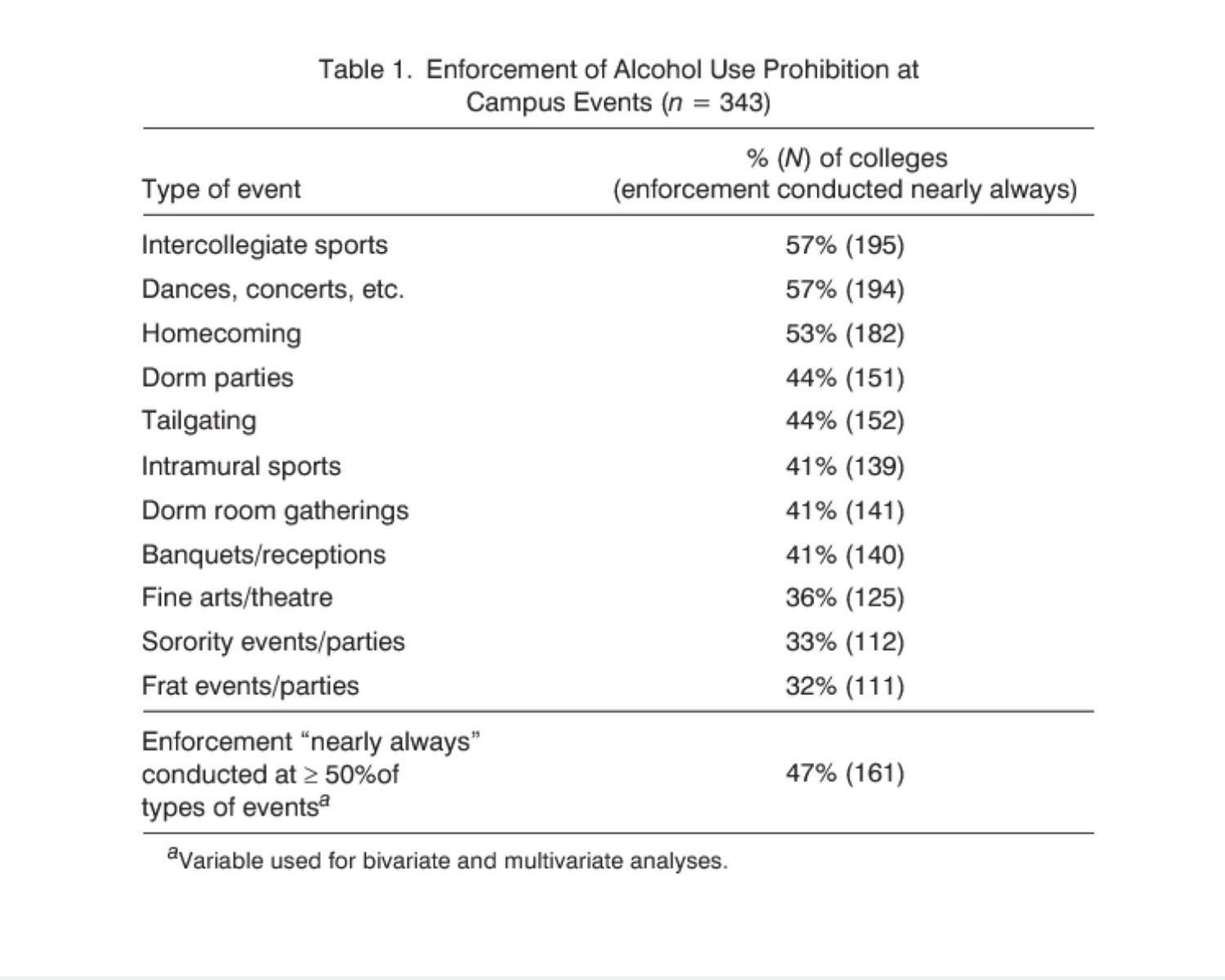
Significantly, parties, social consensus, and above all a fixation on status explain why many college women, almost monolithically, gravitate to such an obnoxious and juvenile phenomenon as the frat bro douche bag. Women, being consensus driven and emphasizing the importance of group cohesion, love status and above all parties in ways at least some men find utterly foreign. As a result, many of the most physically desirable college women are rightly derided as little more than groupies for frat boys and student athletes, drawn in by the parties that only fraternities can host (at least at scale), in very large part because of this unnatural monopoly. It should be disclaimed that while many of them are physically alluring, almost all of them are quite vapid and hardly collegiate as the term is properly understood. On par or perhaps even superseding the element of sportsball in college life in America, whereby the American universities have whored themselves out as the de facto minor league for the NFL and NBA, the Greek system is a leading if not the greatest single factor in why a college education in America, although described as higher education, is often wanting of that sense of Bildung, which denotes both being educated and being cultured.
Some may charitably describe the unnatural monopoly that has been handed to douche bag frat boys as a mere example of the law of unintended consequences, but certain propensities in American life suggest this is likely not at all unintentional, but very much intended and deliberate. The purpose of any system is what it does, after all. And just as intent can always be reasonably inferred from the natural and predictable consequences that result from any given action, the systemic way college police and municipal police departments turn a blind eye to fraternities serving alcohol to persons under 21 smacks of more than just willful ignorance.
Despite these and other harms, inefficiencies, and absurdities caused by these ridiculous laws, a majority in America seem to support these laws. Despite the abject stupidity bound up in the 21 age restriction, a majority of Americans express support for the law time and time again in various public opinion polls. Indeed, certain circles in mainstream conservatism and even the more radical right have expressed some measure of apologism for the prohibition era, while others wrongly contend that alcohol is a far more destructive vice than marijuana and other illicit drugs that have no net benefit under a social utility analysis.2 Insofar as most if not all instances of such pigheaded stupidity are limited to America, this is easily attributed to the same puritanical legacy on which these laws are founded. It is not based on anything rational, nor does it make sense given other vices and harms that are far more destructive are tolerated and even encouraged in this backward society. The seemingly intractable status of the prohibition of alcohol for persons under 21 is compounded by the undue influence and power of M.A.D.D. (Mothers Against Drunk Driving) as a lobbying group. Few politicians have the gall to stand up to either the emotive, irrational rhetoric that is bound up in this question or the clout and purse strings of this special interest group.3
Expressions of unmitigated hostility to alcohol are particularly troubling for other reasons, not only because of the net benefit alcohol provides under a net social utility analysis, but because of the important—and overall positive—role alcohol has played in European culture and civilization. Alcohol, including beers, ales, and wine, is an indispensable component of the European culinary tradition and, with exception of Islam and perhaps the Puritanical societies that existed in the new world, in many advanced civilizations in world history. Imagine life in Germany or Belgium without beer, Scotland or Ireland without Scotch, or indeed many European nations beyond just France without the unending varieties of red and white wine.
Beyond just alcohol’s indispensable role in the culinary traditions of Europe and other cultures, alcohol is an important and overall beneficial conduit to socializing. This is evidenced in institutions such as the British pub and the German beer hall or garden. Many readers are likely to regard spectator sports—derisively referred to as sportsball in Internet parlance—as an unmitigated negative aspect of modern life, and not without good reason. Despite its many evils and drawbacks, there is something positive about its propensity to bring people together in common support for a team, a communal experience that is punctuated and indeed consummated by enjoying strong drink together in unison. Alcohol, as much or more so than good food, acts as a sort of adhesive agent, a social lubricant, that allows parties and other get-togethers to flourish. One of the worst aspects of the Covid lunacy that swept so many regions in this country and so many countries across the world is that, having been trained to be shut-ins during the lockdown, people are generally going to bars less and less, which means they are socializing less and less.
Beyond alcohol’s indispensable role in culture and culinary traditions and how it acts as a social adhesive, alcohol consumption is one of those great pleasures in life that would be sorely missed if killjoys in our midst had their way. It is a part of our culinary tradition because having a nice cabernet sauvignon with a porterhouse steak or a Barbera d’Asti with brick oven pizza is a great and indispensable pleasure. For white wines to go with poultry and fish, few pairings can beat a good Riesling that is not too dry or too sweet. Whether to calm the nerves in the wake of life’s stresses and battles or in celebration of good times or adversity overcome, enjoying a shot (or several) of one’s favorite libation is also one of life’s great pleasures. Cocktails, also, receive an express endorsement as one of the indispensable joys of life. Particularly in spring and summer, there are few things as delicious, refreshing, and invigorating as a gin and tonic served over ice with quality tonic water containing cane sugar—not high fructose corn syrup—and a decent gin. Beefeater is a personal favorite, although Tanqueray and Bombay Sapphire are excellent substitutes. As modernity becomes more insufferable, and as European civilization is faced with a number of existential threats against its very posterity, the irrational focus on such pleasures is exposed as particularly petty and bizarre.
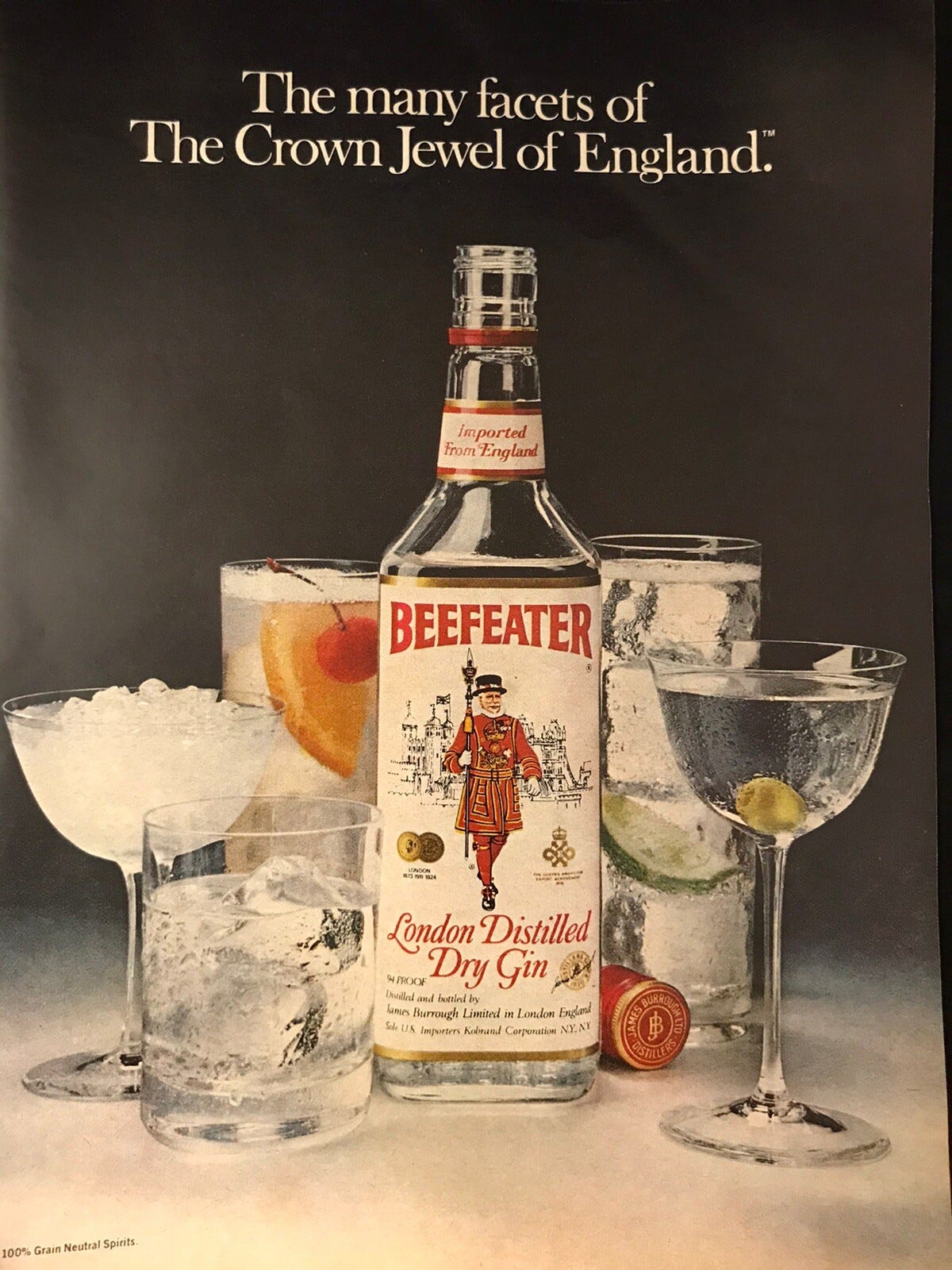
Contrary to the insistence of those who defend such stupidity, these ridiculous laws are just one of many ways that life in America is but a mockery, a sick joke. Young men can sign up for this country’s armed forces, die or suffer horrible injuries in the wake of forever wars resulting from how this country is beholden to Israeli-Jewish interests, but they are prohibited by law from getting a drink. YouTube is awash with videos of do-goody cops busting seniors in high school and even adult college students. Now and then a European will rightly note in the comments section how absurd it is that this country treats adults like children.
Above all, such ridiculous laws belie silly this-and-that talk about how America is the land of the free. Such rah-rah blather is empty and wanting for many reasons, but few can compare with how backwards American life is in relation to alcohol. Indeed, America’s backward ways on the matter of alcohol, including the ridiculous laws prohibiting consumption by adults under 21, is just one of countless reasons how and why being an American really sucks. And yet so many are so deep in the kool-aid they not only put up with these absurd laws, they support them. One irony is the need for a drink now and then if not now and sooner is only exacerbated by the affliction of myriad dysfunctions and absurdities of life in America; these backwards ways and laws about alcohol are but one of many. Here is to a stiff drink, or several, replete with a toast to those who yearn for Mother Europa while rightly decrying life in America for what it really is: at best a backwards mess, at worst a dystopian abomination.
Repudiating Lee Greenwood’s “God Bless the USA:”

Ask not what you can do for your country. Ask what your country did to you. -“Dogma” by KMFDM
Smitten with Charlotte and Cindy

AUTHOR’S NOTE: this essay contains significant SPOILERS, revealing the end result of each narrative. The Raven's Call: A Reactionary Perspective is a reader-supported publication. To receive new post…
Enveloped by Kultur-Terror

Author’s note and disclaimer: this essay is exceptional for its pronounced anti-American sentiment. This author is grateful for and appreciative of those more mainstream readers who likely disagree o…
It would be a mistake to describe this religious movement as Protestant per se, as Lutherans in particular tended to oppose the temperance movement.
Much of the defense of the prohibition of alcohol for persons under 21 cites projected lives saves, mitigation or alleged harms—these include drinking by young adults and teens, which is circular reasoning and and a conclusion this author vehemently disagrees with. Such analyses overlook net social utility analysis. A classic example of net social utility analysis is the automobile. Automobile account for tens of thousands of deaths and injuries a year, and yet society retains them because the net social utility of cars far outweighs these harms. That analysis also explains why cars are not build like tanks or built with a maximum speed of 15 or 20 miles an hour in order to reduce potential for injury or death. The reduced social utility and outlandish expenses associated with such ludicrous restrictions is far in excess of the lives such measures could save. This author asserts the arguments for this law and restrictions of alcohol fail this analysis. Indeed, as youth culture in Europe demonstrates, there are social benefits to teens and young people drinking, provided non-restrictive measures are in place to encourage moderation and balance.
Apologists for America’s ridiculous legacy with alcohol should consider a square and unflinching look at the antecedents to the prohibition era to which these laws also descend. This legacy gave rise to many absurd and destructive consequences. The body of religious fervor that gave rise to the temperance movements and prohibition also is properly attributed to the abolitionist movement. Abolition of slavery may seem unimpeachable, and not with good reason, but this religious war was a proximate cause and important causal factor that led to the Civil War, in which many hundreds of thousands were killed. The same religious ethos has led to other absurdities, such a prohibition of celebrating Christmas in Boston in 1856 and other religiously induced lunacy, including the quackery of figures like John Harvey Kellogg who believed bland, less than delicious foods (such as the corn flakes he came to peddle) inhibited male masturbation in toddlers and children as well as adolescent and even males.